
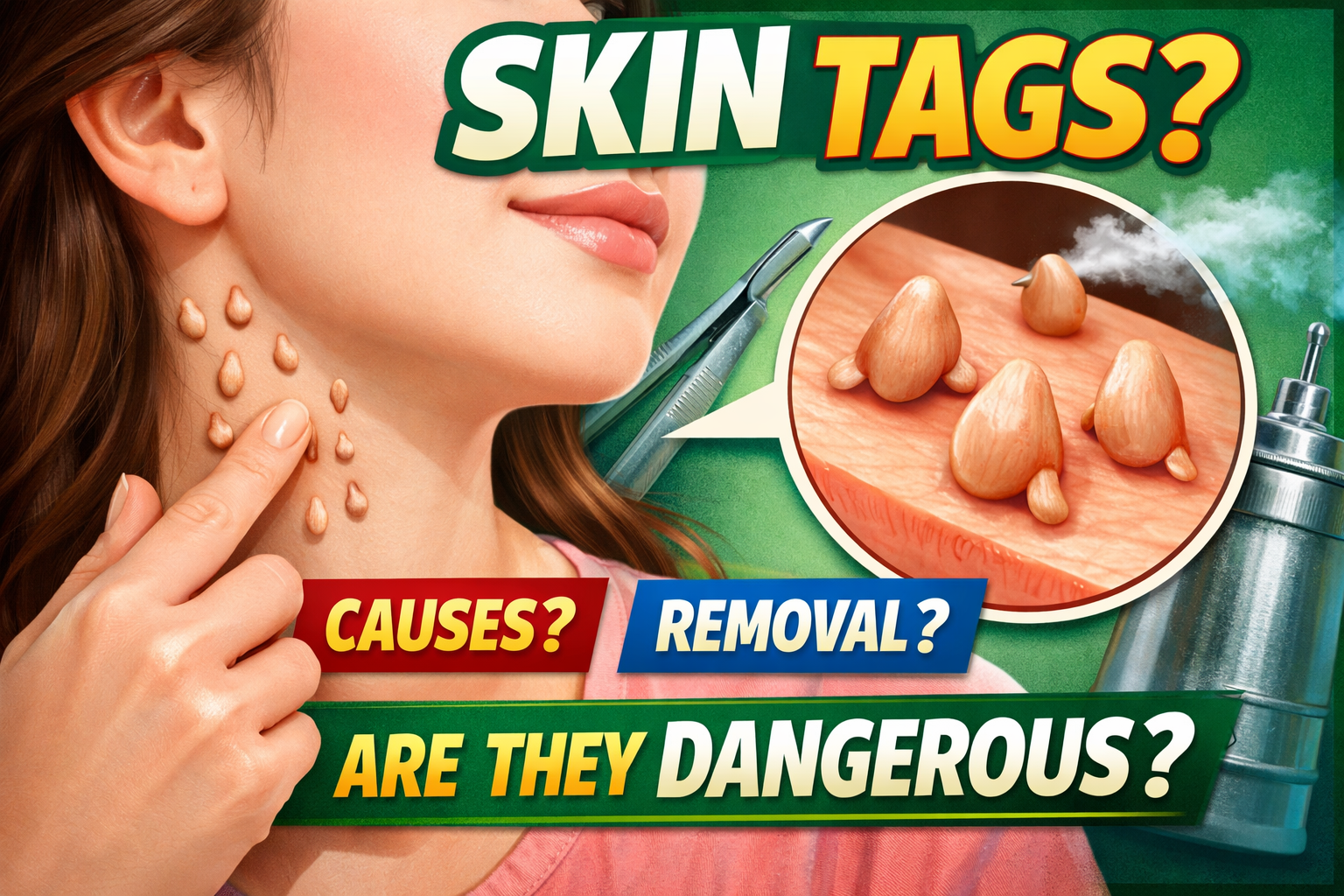
Skin tags are small, soft growths that appear on the skin and are quite common in adults. Though they may look unusual or sometimes uncomfortable, skin tags are usually harmless and non-cancerous. Many people notice them developing on parts of the body where skin rubs against skin or clothing. Areas such as the neck, underarms, eyelids, groin, and under the breasts are among the most common places where skin tags appear.
These tiny growths are medically known as acrochordons. They usually look like small, flesh-colored or slightly darker pieces of skin hanging from a thin stalk. In most cases, skin tags do not cause pain. However, they may become irritated if they constantly rub against jewelry, clothing, or during shaving.
Why Do Skin Tags Appear?
Doctors believe that skin tags develop mainly due to friction. When skin repeatedly rubs against skin or fabric, small growths may start forming over time. This is why they are often found in folds of the body.
Apart from friction, several other factors may increase the chances of developing skin tags. Age is one of them, as skin tags are more common in people over the age of 30 or 40. People who are overweight or obese also tend to develop them more frequently because of increased skin folds.
Hormonal changes can also play a role. Many women notice skin tags appearing during pregnancy due to hormonal shifts in the body. In addition, some studies suggest that people with insulin resistance or type 2 diabetes may be more prone to developing skin tags.
Genetics may also contribute. If skin tags run in your family, there is a higher possibility that you might develop them as well.
Are Skin Tags Dangerous?
In most cases, skin tags are completely harmless. They are benign growths and do not turn into skin cancer. However, some people find them cosmetically bothersome, especially when they appear on visible areas like the face or neck.
Sometimes skin tags can twist or get irritated, which may cause redness or mild discomfort. If a skin tag suddenly changes color, grows rapidly, or starts bleeding without any reason, it is advisable to consult a doctor to rule out other skin conditions.
Can Skin Tags Be Removed?
Yes, skin tags can be safely removed if they become uncomfortable or cosmetically undesirable. Dermatologists usually perform quick and simple procedures such as freezing the tag (cryotherapy), cutting it off with sterile surgical scissors, or burning it using a special medical device.
These procedures are generally quick and done in clinics with minimal discomfort. It is important to avoid attempting to remove large skin tags at home, as improper removal may lead to infection or bleeding.
Simple Ways to Reduce the Chances
Although skin tags cannot always be prevented, certain lifestyle habits may reduce the likelihood of developing them. Maintaining a healthy weight can help reduce skin friction. Wearing comfortable clothing that does not rub excessively against the skin may also help.
Keeping blood sugar levels under control is another important factor, especially for people with insulin resistance or diabetes. Good skincare and hygiene can also help keep the skin healthy and reduce irritation.
When to See a Doctor
Most skin tags do not require medical treatment. However, if a growth becomes painful, changes in appearance, or causes repeated irritation, it is best to seek medical advice. A dermatologist can quickly examine the growth and confirm whether it is a harmless skin tag or another skin condition.
In the end, skin tags are a very common part of aging and skin changes. While they may look bothersome at times, they are usually harmless and easily manageable with simple medical procedures if needed.
